Buy kabayanonline.eu ?
We are moving the project
kabayanonline.eu .
Are you interested in purchasing the domain
kabayanonline.eu ?
domain@kv-gmbh.de · 0541-91531010
Buy kabayanonline.eu ?
What are trophic levels and trophic structures?
Trophic levels refer to the hierarchical levels in an ecosystem through which energy and nutrients flow. They represent the feeding positions of different organisms in a food chain or food web. Trophic structures, on the other hand, describe the organization of these trophic levels within an ecosystem. This includes the distribution of energy and nutrients among different organisms, as well as the interactions and relationships between them. Overall, trophic levels and trophic structures are important concepts for understanding the flow of energy and nutrients in ecosystems and the dynamics of food chains and food webs. **
Are trophic levels and trophic levels the same in biology?
No, trophic levels and trophic levels are not the same in biology. Trophic levels refer to the hierarchical levels in an ecosystem based on an organism's position in the food chain, such as producers, primary consumers, secondary consumers, etc. On the other hand, trophic cascades are the indirect effects that occur when a change in one trophic level impacts other trophic levels in the ecosystem. Both concepts are important in understanding the dynamics of energy flow and interactions within ecosystems. **

Similar search terms for Trophic
Top-Angebote
Products related to Trophic:
-
Hape Gourmet Grill Wooden Play Kitchen & Food Accessories, 22 PiecesHAPE GOURMET GRILL & ACCESSORIES -22 PIECES - Double-sided grates, a collapsible side table, moveable wheels and an open-and-close hood make this grill a gourmet's dream. Watch out for the hot coals! Everyone loves a good barbecue!189,99 $*Shipping: 0,00 $Secure redirect to the provider
-
Beauty Home Scents Box Home Spirit gift setBeauty Home Scents Box Home Spirit, , Air Fresheners Home Scents, Fill your home with a gorgeous fragrance or surprise your loved one with a lovely gift. Beauty Home Scents Box Home Spirit gift set will be a sure hit in both cases. A carefully selected home fragrance will instantly create a calm, relaxing atmosphere and make any home feel lovely and cosy. Characteristics: limited edition ideal as a gift gives the whole space a beautiful fragrance The set contains: Notino Home Collection Feelin' Peaceful (Cherry Blossom Scented Candle) scented candle 65 g ipuro Essentials Black Bamboo aroma diffuser 100 ml ipuro Essentials Black Bamboo refill for aroma diffusers 200 ml Souletto Orientalism Room Spray room spray 100 ml28,50 £*Shipping: 3,99 £Secure redirect to the provider
-
Beauty Discovery Box Notino XL – Skin Food Nourish Boost (Weleda) set WBeauty Discovery Box Notino XL – Skin Food Nourish Boost (Weleda), , Protection against Sunlight for Women, Everything for beautiful-looking skin all in one package. The Beauty Discovery Box Notino XL – Skin Food Nourish Boost (Weleda) beauty gift set contains not one but several products to help you create or enrich your daily beauty routine and make you or your loved ones happy to receive it as a gift. The set contains: Weleda UV Glow Fluid skin fluid with a brightening effect 30 ml Weleda Skin Food nourishing shower cream 20 ml Weleda Skin Food extra nourishing night cream with regenerative effect 10 ml Weleda Skin Food universal nourishing herbal cream 10 ml Weleda Skin Food nourishing lip balm 4.8 g Characteristics: for perfectly soft and smooth skin comprehensive care for everyday routine limited edition12,40 £*Shipping: 3,99 £Secure redirect to the provider




-
Are trophic levels and trophic levels the same thing in biology?
No, "trophic levels" and "trophic levels" are not the same thing in biology. "Trophic levels" refer to the hierarchical levels in an ecosystem based on an organism's position in the food chain, such as producers, primary consumers, secondary consumers, and so on. On the other hand, "trophic levels" appears to be a typographical error or a repetition of the term "trophic levels." In biology, it is important to use accurate and specific terminology to avoid confusion and miscommunication. **
-
Why do organisms become larger from trophic level to trophic level?
Organisms become larger from trophic level to trophic level due to the efficiency of energy transfer in ecosystems. As energy is transferred from one trophic level to the next, there is a loss of energy in the form of heat and metabolic processes. Larger organisms are able to consume more energy-rich food sources and have a more efficient metabolism, allowing them to grow in size as they move up the food chain. Additionally, larger organisms are better equipped to capture and consume prey, giving them a competitive advantage in obtaining energy and resources. **
-
Why do organisms get larger from trophic level to trophic level?
Organisms tend to get larger from one trophic level to the next because as energy is transferred up the food chain, there is a loss of energy at each level. This means that organisms at higher trophic levels need to consume larger quantities of organisms from lower trophic levels to obtain enough energy to sustain themselves. Additionally, larger organisms are more efficient at capturing and consuming prey, allowing them to thrive at higher trophic levels. Finally, larger organisms have a lower surface area to volume ratio, which helps them retain heat and energy more effectively. **
-
Why does the biomass decrease from trophic level to trophic level?
Biomass decreases from trophic level to trophic level because energy is lost as it moves through the food chain. Organisms at each trophic level use some of the energy they consume for their own metabolic processes, such as respiration and movement, and the rest is lost as heat. This means that there is less energy available to be passed on to the next trophic level, resulting in a decrease in biomass. Additionally, not all of the energy from one trophic level is consumed by the next level, as some is lost through waste and uneaten parts of organisms. **
What are trophic levels in biology?
Trophic levels in biology refer to the hierarchical levels in an ecosystem where organisms are grouped based on their feeding relationships. The primary producers, such as plants, are at the base of the trophic levels as they convert sunlight into energy through photosynthesis. Herbivores that feed on plants are at the next level, followed by carnivores that eat herbivores. Each trophic level represents a transfer of energy and nutrients through the ecosystem, with energy decreasing as it moves up the levels. **
What is the trophic level of omnivores?
Omnivores are organisms that consume both plants and animals, so their trophic level can vary. When they consume plants, they are considered primary consumers (herbivores) and when they consume animals, they are considered secondary consumers (carnivores). This means that omnivores can occupy multiple trophic levels within a food web, depending on their diet. **
Top-Angebote
Products related to Trophic:
-
Dermacol Accessories Beauty Blender applicator set 3 pcDermacol Accessories Beauty Blender, 3 pc, Sponges for Women, When you’re applying foundation with your fingers or a brush, do you get the feeling that you’re not achieving the results you’d like? Try an alternative to traditional brushes. The Dermacol Accessories Beauty Blender makeup sponge provides flawless application of foundation for a professional-looking result. It will help you cover all skin imperfections with a more natural-looking result than you could ever achieve with your fingers. Its shape adapts to the contours of every face, applying product into every nook and cranny, with its ultra-soft surface ensuring an even and precise application without streaks or absorbing too much makeup. The set contains: makeup sponge 1 pc sponges mini 2 pc Characteristics: comfortable to hold in the hand applies cream or liquid makeup precisely the result is a smooth finish smooth foam applicator How to use: Dampen the sponge before use. Apply foundation, base or concealer to the sponge, then spread lightly across the face.4,60 £*Shipping: 3,99 £Secure redirect to the provider
-
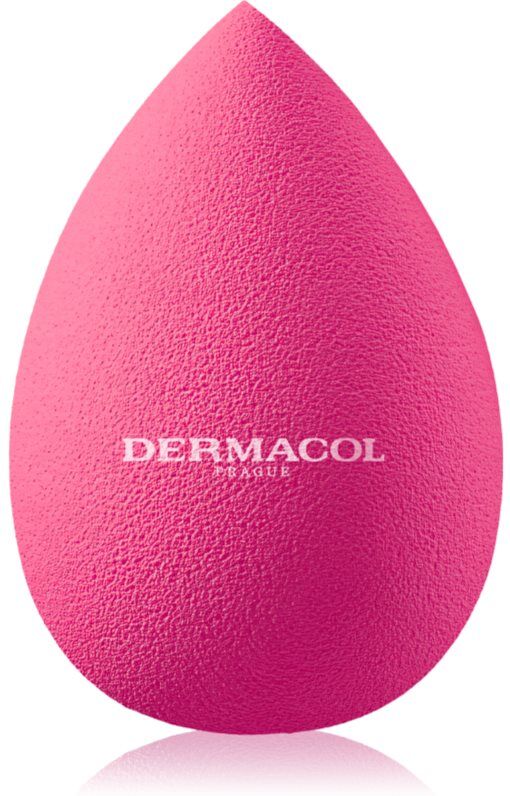
Dermacol Accessories Beauty Blender teardrop makeup sponge 1 pcDermacol Accessories Beauty Blender, 1 pc, Sponges for Women, When you’re applying foundation with your fingers or a brush, do you get the feeling that you’re not achieving the results you’d like? Try an alternative to traditional brushes. The Dermacol Accessories Beauty Blender makeup sponge provides flawless application of foundation for a professional-looking result. It will help you cover all skin imperfections with a more natural-looking result than you could ever achieve with your fingers. Its shape adapts to the contours of every face, applying product into every nook and cranny, with its ultra-soft surface ensuring an even and precise application without streaks or absorbing too much makeup. Characteristics: comfortable to hold in the hand applies cream or liquid makeup precisely the result is a smooth finish smooth foam applicator How to use: Dampen the sponge before use. Apply foundation, base or concealer to the sponge, then spread lightly across the face.3,30 £*Shipping: 3,99 £Secure redirect to the provider
-
Hape Gourmet Grill Wooden Play Kitchen & Food Accessories, 22 PiecesHAPE GOURMET GRILL & ACCESSORIES -22 PIECES - Double-sided grates, a collapsible side table, moveable wheels and an open-and-close hood make this grill a gourmet's dream. Watch out for the hot coals! Everyone loves a good barbecue!189,99 $*Shipping: 0,00 $Secure redirect to the provider
-
What are trophic levels and trophic structures?
Trophic levels refer to the hierarchical levels in an ecosystem through which energy and nutrients flow. They represent the feeding positions of different organisms in a food chain or food web. Trophic structures, on the other hand, describe the organization of these trophic levels within an ecosystem. This includes the distribution of energy and nutrients among different organisms, as well as the interactions and relationships between them. Overall, trophic levels and trophic structures are important concepts for understanding the flow of energy and nutrients in ecosystems and the dynamics of food chains and food webs. **
-
Are trophic levels and trophic levels the same in biology?
No, trophic levels and trophic levels are not the same in biology. Trophic levels refer to the hierarchical levels in an ecosystem based on an organism's position in the food chain, such as producers, primary consumers, secondary consumers, etc. On the other hand, trophic cascades are the indirect effects that occur when a change in one trophic level impacts other trophic levels in the ecosystem. Both concepts are important in understanding the dynamics of energy flow and interactions within ecosystems. **
-
Are trophic levels and trophic levels the same thing in biology?
No, "trophic levels" and "trophic levels" are not the same thing in biology. "Trophic levels" refer to the hierarchical levels in an ecosystem based on an organism's position in the food chain, such as producers, primary consumers, secondary consumers, and so on. On the other hand, "trophic levels" appears to be a typographical error or a repetition of the term "trophic levels." In biology, it is important to use accurate and specific terminology to avoid confusion and miscommunication. **
-
Why do organisms become larger from trophic level to trophic level?
Organisms become larger from trophic level to trophic level due to the efficiency of energy transfer in ecosystems. As energy is transferred from one trophic level to the next, there is a loss of energy in the form of heat and metabolic processes. Larger organisms are able to consume more energy-rich food sources and have a more efficient metabolism, allowing them to grow in size as they move up the food chain. Additionally, larger organisms are better equipped to capture and consume prey, giving them a competitive advantage in obtaining energy and resources. **
Similar search terms for Trophic
-
Beauty Home Scents Box Home Spirit gift setBeauty Home Scents Box Home Spirit, , Air Fresheners Home Scents, Fill your home with a gorgeous fragrance or surprise your loved one with a lovely gift. Beauty Home Scents Box Home Spirit gift set will be a sure hit in both cases. A carefully selected home fragrance will instantly create a calm, relaxing atmosphere and make any home feel lovely and cosy. Characteristics: limited edition ideal as a gift gives the whole space a beautiful fragrance The set contains: Notino Home Collection Feelin' Peaceful (Cherry Blossom Scented Candle) scented candle 65 g ipuro Essentials Black Bamboo aroma diffuser 100 ml ipuro Essentials Black Bamboo refill for aroma diffusers 200 ml Souletto Orientalism Room Spray room spray 100 ml28,50 £*Shipping: 3,99 £Secure redirect to the provider
-
Beauty Discovery Box Notino XL – Skin Food Nourish Boost (Weleda) set WBeauty Discovery Box Notino XL – Skin Food Nourish Boost (Weleda), , Protection against Sunlight for Women, Everything for beautiful-looking skin all in one package. The Beauty Discovery Box Notino XL – Skin Food Nourish Boost (Weleda) beauty gift set contains not one but several products to help you create or enrich your daily beauty routine and make you or your loved ones happy to receive it as a gift. The set contains: Weleda UV Glow Fluid skin fluid with a brightening effect 30 ml Weleda Skin Food nourishing shower cream 20 ml Weleda Skin Food extra nourishing night cream with regenerative effect 10 ml Weleda Skin Food universal nourishing herbal cream 10 ml Weleda Skin Food nourishing lip balm 4.8 g Characteristics: for perfectly soft and smooth skin comprehensive care for everyday routine limited edition12,40 £*Shipping: 3,99 £Secure redirect to the provider
-
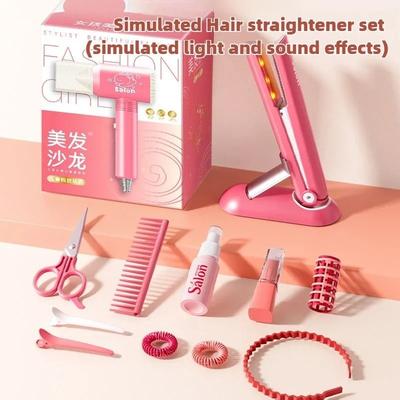
Uplift Essentials Girls Beauty Salon And Makeup Simulation Set Ultimate Fashion Styling Playset flat IronStep into a world of glamour and creativity with an allinone styling station designed for the next generation of fashionistas. This kids hair and beauty makeup set provides a safe, messfree environment for children to explore selfexpression and...62,97 $*Shipping: 0,00 $Secure redirect to the provider
-
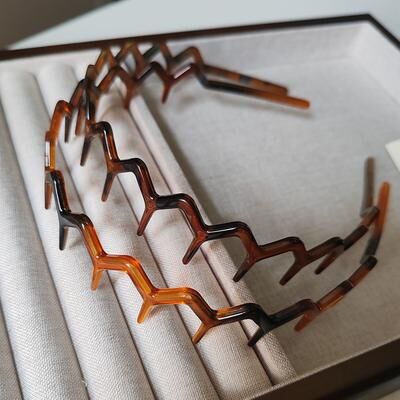
Fusion Finds Retro Leopard Headband Set Vintage Women's Hair Band Fashion Accessories leopard BrownRefresh your everyday hairstyle in seconds with these stylish Leopard Headband essentials that combine comfort with timeless fashion. Designed for women and girls, this 2piece set features one classic black and one chic leopard print to complement...29,97 $*Shipping: 0,00 $Secure redirect to the provider
-
Why do organisms get larger from trophic level to trophic level?
Organisms tend to get larger from one trophic level to the next because as energy is transferred up the food chain, there is a loss of energy at each level. This means that organisms at higher trophic levels need to consume larger quantities of organisms from lower trophic levels to obtain enough energy to sustain themselves. Additionally, larger organisms are more efficient at capturing and consuming prey, allowing them to thrive at higher trophic levels. Finally, larger organisms have a lower surface area to volume ratio, which helps them retain heat and energy more effectively. **
-
Why does the biomass decrease from trophic level to trophic level?
Biomass decreases from trophic level to trophic level because energy is lost as it moves through the food chain. Organisms at each trophic level use some of the energy they consume for their own metabolic processes, such as respiration and movement, and the rest is lost as heat. This means that there is less energy available to be passed on to the next trophic level, resulting in a decrease in biomass. Additionally, not all of the energy from one trophic level is consumed by the next level, as some is lost through waste and uneaten parts of organisms. **
-
What are trophic levels in biology?
Trophic levels in biology refer to the hierarchical levels in an ecosystem where organisms are grouped based on their feeding relationships. The primary producers, such as plants, are at the base of the trophic levels as they convert sunlight into energy through photosynthesis. Herbivores that feed on plants are at the next level, followed by carnivores that eat herbivores. Each trophic level represents a transfer of energy and nutrients through the ecosystem, with energy decreasing as it moves up the levels. **
-
What is the trophic level of omnivores?
Omnivores are organisms that consume both plants and animals, so their trophic level can vary. When they consume plants, they are considered primary consumers (herbivores) and when they consume animals, they are considered secondary consumers (carnivores). This means that omnivores can occupy multiple trophic levels within a food web, depending on their diet. **
* All prices are inclusive of VAT and, if applicable, plus shipping costs. The offer information is based on the details provided by the respective shop and is updated through automated processes. Real-time updates do not occur, so deviations can occur in individual cases. ** Note: Parts of this content were created by AI.